

Bright Data and Oxylabs lead on scale and enterprise tooling (100M+ IPs, full unblocking suites, from roughly $6–$8/GB). DataImpulse and IPRoyal lead on price (from $1/GB and $1.75/GB respectively, with non-expiring traffic). Webshare is the best free starting point (10 proxies, 1GB/month, forever).
Decodo and Proxy-Cheap sit in the middle as balanced, general-purpose picks. Which one is "best" depends mainly on your budget, target sites, and whether you need residential, datacenter, ISP, or mobile IPs.
What is a proxy provider?
A proxy provider is a company that gives you access to a network of IP addresses — residential, datacenter, ISP, or mobile — that sit between your device and the internet. When you send a request through a proxy, the destination site sees the proxy's IP instead of yours, which lets you appear to browse from a different location, spread requests across many addresses, or avoid being identified and blocked as a single user making unusually high traffic.
Can’t figure out which proxy provider to choose? Here are the 11 Best Proxy Vendors, along with their specifications:
Residential vs. datacenter vs. ISP vs. mobile proxies
Type | IP Source | Speed | Detection Risk | Typical Price |
|---|---|---|---|---|
Residential | Real home ISP connections | Moderate | Low — looks like a real user | $1–$8/GB |
Datacenter | Cloud/hosting providers | Very fast | Higher — easier to flag as non-residential | $0.50–$3/GB or a few $/IP/month |
ISP (static residential) | ISP-assigned, hosted on servers | Fast | Low, with the speed of datacenter | $1.50–$5/IP/month |
Mobile | Real 3G/4G/5G carrier connections | Slower | Lowest — hardest to distinguish from real mobile users | $2–$15/GB |
Most providers on this list sell more than one type — the "best" choice depends on whether you need to look like a genuine residential visitor (use residential or mobile) or just need raw speed against sites with weak bot detection (datacenter is far cheaper).
How to choose the right proxy provider
Match the proxy type to your target.
Datacenter proxies are fine for sites with minimal bot protection; anything defended (major e-commerce, search engines, social platforms) usually needs residential or mobile IPs.
Price per GB isn't the whole story.
A cheap pool with a high block rate costs more per successful request than a pricier pool that works reliably. Where possible, run a small test against your actual target sites before committing to a larger plan.
Check whether traffic expires.
Subscription plans often reset unused bandwidth every billing cycle; pay-as-you-go providers with non-expiring traffic (DataImpulse, IPRoyal) can work out cheaper for bursty, irregular usage even at a higher sticker price.
Confirm real trial terms.
"Free trial" varies wildly — some are genuinely free, others are a few dollars for a small, time-limited data allotment. Read the actual terms before treating a "trial" as risk-free.
Look at support and documentation.
24/7 live chat vs. email-only support matters far more once something breaks mid-project than it does during signup.
Full comparison table
Pricing below reflects each provider's own published rates as of July 2026, across whichever proxy type is their main offering. Prices change often — verify current rates directly before purchasing.
Proxy | Specifications | IP Pool Size | Reviews | Free Trial | Details |
|---|---|---|---|---|---|
Bright Data | High Speed, Unlimited Bandwidth | Over 72 million | Average 4.6/5 | Free Trial | |
Nimbleway | High Speed, Unlimited Bandwidth | 50+ million | Average 4/5 | Free Trial | |
Proxy Cheap | Moderate Speed, Limited Bandwidth | 6+ million | Average 4.5/5 | Free Trial | |
Oxylabs | High Speed, Unlimited Bandwidth | Over 100 million | Average 4.4/5 | Free Trial | |
Webshare | High Speed, Limited Bandwidth | 1+ million | Average 4/5 | Free Trial | |
Stormproxy | Moderate Speed, Limited Bandwidth | 70,000 + Rotating IPS | Average 4.6/5 | Free Trial | |
Smart proxy | High Speed, Unlimited Bandwidth | Over 40 million | Average 3.5/5 | Free Trial | |
GeoSurf | High Speed, Limited Bandwidth | Over 2.5 million | Average 3.7/5 | Free Trial | |
Shifter | High Speed, Unlimited Bandwidth | Over 31 million | Average 4.6/5 | Free Trial | |
IP Royal | High Speed, Unlimited Bandwidth | Over 2 million | Average 4.6/5 | Free Trial | |
Packet Stream | Moderate Speed, Limited Bandwidth | Over 7 million | Average 4.6/5 | Free Trial |
The 9 providers residential proxy provider

The largest, most feature-complete provider here — residential, datacenter, ISP, and mobile proxies plus a Web Unlocker and SERP API. Pay-as-you-go rates run roughly $5.88-$8/GB, dropping toward $2-3.50/GB at committed volume. For more information, read our Bright Data
Good at
Watch out
Best for: Large-scale operations needing built-in unblocking tools.
Avoid if: You want instant signup with no verification step.

One of the largest claimed pools (100M+ IPs) across residential, datacenter, ISP, and mobile, with free targeting down to ZIP level. Residential starts around $8/GB; datacenter is far cheaper, from roughly $0.60/GB. For more information, read our Oxylabs.
Good at
Watch out
Best for: Enterprise SEO teams, agencies, and large-scale scraping.
Avoid if: You only need a few checks per month.

Formerly Smartproxy — residential, datacenter, ISP, and mobile from a 40-55M+ IP pool, priced roughly $3.75-$7/GB depending on volume. Commonly cited as a strong price-to-reliability balance for small-to-medium projects. For more information, read our Decodo.
Good at
Watch out
Best for: Small-to-medium projects wanting price/reliability balance.
Avoid if: You want a longer trial before committing.

A permanent free tier — 10 proxies, 1GB/month, forever. Datacenter plans start around $2.99/month; residential runs $3.50-$7/GB. The lowest-risk way to test proxies before paying anything. For more information, read our Webshare.
Good at
Watch out
Best for: First-time users testing proxies at zero cost.
Avoid if: Your main target is Google Search.

Flat-rate, unlimited bandwidth instead of per-GB billing — from around $50/month for 5 ports, drawing from a smaller ~700,000 IP pool limited to the US and Europe. Good for steady, moderate-volume tasks. For more information, read our Storm Proxies.
Good at
Watch out
Best for: Steady, moderate-volume SEO monitoring.
Avoid if: You need IPs outside the US or Europe.

Rotating residential and datacenter proxies from a 50M+ IP pool. Rotating residential runs around $4.99/GB, with higher-volume bandwidth blocks bringing the effective rate down toward $1.50-$2.29/GB. For more information, read our Proxy-Cheap.
Good at
Watch out
Best for: General scraping and multi-account management.
Avoid if: You want to test with a free trial before paying.

Covers all four proxy types from a 32-34M+ IP pool across 195+ countries. Residential starts around $7/GB at low volume, dropping to ~$1.75/GB at bulk — and purchased traffic never expires. For more information, read our IPRoyal.
Good at
Watch out
Best for: Bursty, irregular usage that doesn't want to lose bandwidth.
Avoid if: You need a genuinely free trial first.
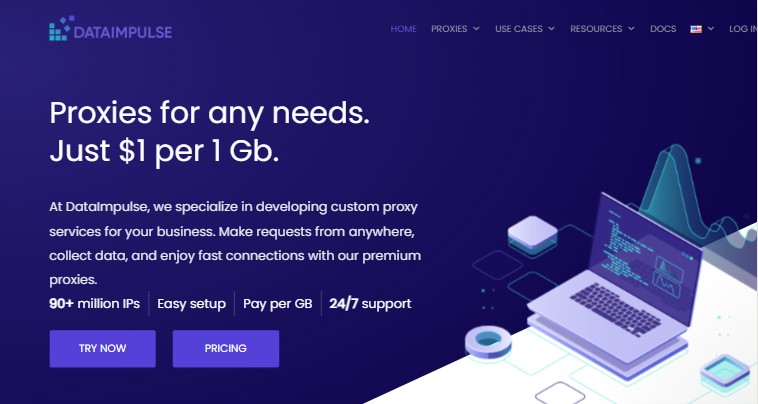
Residential from $1/GB, datacenter from $0.50/GB, mobile from $2/GB — pay-as-you-go with traffic that never expires. A 90M+ first-party IP pool (not resold) is cited as a factor in lower block rates on defended sites.
Good at
Watch out
Best for: Lowest cost-per-GB with a clean, first-party pool.
Avoid if: You want a $0 free tier with no spend at all.

A peer-to-peer residential network where users share unused bandwidth for credits, funding a claimed 80M+ IP pool at roughly $1/GB pay-as-you-go, no subscription.
Good at
Watch out
Best for: Budget scraping on lightly protected targets.
Avoid if: Your targets are Google Search or major social platforms.
FAQ
A proxy provider or vendor is a company or service that offers you proxy servers. These servers act as a bridge between your device and the internet. They mask the user's IP address, giving anonymity, secrecy and security. One can also access the geo-restricted content with a proxy.
The right proxy selection involves analysing important factors such as API Access, Speed, Stability, and Budget. You can pick one that suits your specific business needs. Choosing the right one can be a perplexing task, but the blog above elaborates on the 11 best proxies with their characterstics to make it easier for you.
Proxies disguise the actual IP address, making it difficult for websites, advertisers, or cyber hackers to track your online activity. They also add a layer of security and privacy to prevent direct attacks on your device. It also tends to encrypt internet traffic so that your information is safe.
Yes! It is legal as long as you use the proxy for privacy and security or access geo-restricted content. However, if you plan on committing fraudulent activities or circumventing restrictions set by the provider, then it is not legal to use them. You need to comply with the local regulations and terms of service of the websites these proxies give access to.
Choosing the best proxy connection type depends on your requirements. For high anonymity, residential proxies are a great choice. If performance and cost are your primary targets, then data center proxies are preferred. Rotating proxies provide the IP diversity you need for large-scale scraping or crawling.
Bright Data and Oxylabs are two of the fastest proxy providers. They have an extensive network that allows access to millions of IP addresses. Performance metrics and various independent tests have proved Bright Data to be the leading and fastest proxy provider, followed by Oxylabs.